Monday, November 14, 2011

China Gets Interesting Motorola RAZR Variants, Including One With 720p Display

Popping up at Weibo today are some interesting China-bound Motorola RAZR variants. The first is a device that takes a lot of design cues from the DROID X and X2, though its chassis does differ a beat from those devices. They’re calling it the XT928 and it looks like it has a 13 megapixel shooter, though will be the same as the Motorola RAZR in processor and display and it may even make its way stateside as the DROID X3.

The other one, the MT917, shakes things up a bit. It takes its design cues from the original RAZR, but has a 4.5 inch 720p HD display. I must say I wouldn’t have minded that version of the device on Verizon instead of the original (though the original is no less good). It also has the 13 megapixel camera that the XT928 has. Would any of you be interested in one of these variants instead of the original? [Meibo via Engadget]

Android’s strength is also its weakness: Decentralization


For years, I’ve been on the sidelines of the exploding mobile market. While I’ve been obsessed with and up to date on mobile technology, I’ve never had a Sidekick or a Blackberry (or even a Razr) because of the costs. Only now am I upgrading my phone to something “smarter”.

The Backstory

Android’s market share skyrocketed during its short lifespan. After operating for two years, Android Inc. was acquired by Google in 2005. Google publically unveiled the Android distribution in late 2007. Four years later, Android is now estimated to make up almost 50% of the worldwide smartphone market (according to Canalys). Apple’s iOS, on the other hand, is estimated to make up only 19% of the mobile market-share. So, how did Android manage to overtake iOS, despite publically launching months later? The answer is decentralization.

Decentralized Distribution: The Good

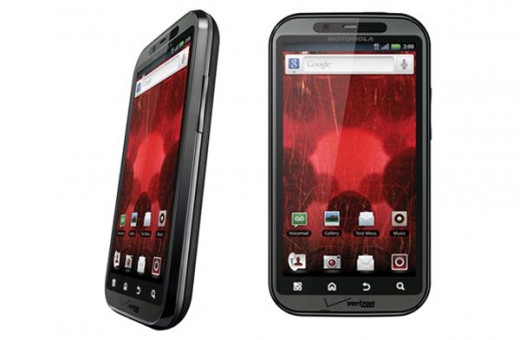
Android found strength in mass distribution. Google captured the hearts of companies like HTC, Samsung and Motorola by giving them a competitive platform for free, unknowing that Microsoft would eventually collect hefty royalties. This gift saved them in many ways, and brought intelligent phones to a lot of new pockets. At the bottom of the barrel, you can snag an Android phone for under $100 without a contract. Top of the line offerings like the Droid Bionic (pictured below) cost upwards of $300 USD even with a two year contract at Verizon. That’s the great thing about Android, it works with (almost) any budget.Motorola Mobility DROID BIONIC 520x340 Androids strength is also its weakness: Decentralization
Unlike iOS, Android isn’t a one size fits all product. Besides the open price range, Android’s flexibility appeals to different tastes and allows for manufacturers to innovate in their own way. Our own Social Media Editor, Sherilynn Macale, took advantage of her Galaxy SII’s customization abilities and showed them off in her article on moving from iOS to Android (warning: her phone’s mind-numbingly cute). As you can see, there are hundreds of available themes and hacks that iPhone fans could only dream of.
Android is also carrier agnostic, and benefited from the iPhone’s slow movement beyond AT&T in the U.S. Now that the iPhone has spread to 3 carriers, this advantage is slowly disappearing.

Mixed Results: The Downside of Fragmentation.

The worst aspect of Android is the freedom different carriers and manufacturers have. Just from the marketing end, the variety of similar looking devices creates customer confusion, and the worst Android implementations are usually the cheapest. Crappy hardware leads to a terrible experience, which makes everyone want to move on to something else.
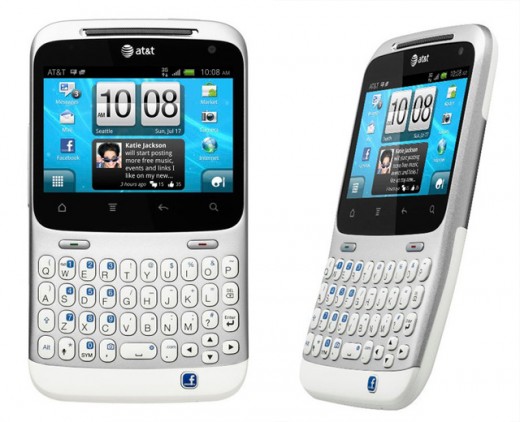
Hardware isn’t the only problem. UI replacements vary by manufacturer, and include Motorola’s Motoblur and HTC’s Sense. These implementations limit customization possibilities and provide a bland experience. It’s hard to imagine the idea of computer manufacturers creating their own MS Windows overlay, so why is this commonly done with Android? Unfortunately, a lot of the time these UI replacements are necessary. For example, the HTC Status (aka Chacha, pictured below) has a small screen and needed an optomized UI.
HTC status 520x422 Androids strength is also its weakness: Decentralization OS fragmentation is another issue. Google relies on manufacturers and carriers to dictate when and if a phone gets an update, which kills the hype of new upgrades and further abstracts the Android experience. OS fragmentation also alienates developers, who must release multiple versions to assure compatibility with all devices.
Here’s the ultimate problem: “Device envy” seldom happens because Android spreads itself too thin. Because there are so many options, there’s never one single product to lust after. The iPhone is just that: one OS and one hardware unit. The iPhone oozes envy because it is a single, tangible entity. When someone says they have an Android phone, it can mean almost anything in terms of quality and sophistication. There is a disconnect between the strong Android brand and the products outside companies throw together for a cheap buck.

That Windows Phone? Is Android’s Biggest Competitor

I’m a sucker for aesthetics and haven’t spent much time on a PC since Vista came out. Awhile ago, my Dad had early iterations of the Windows phone for work, and if I remember correctly, it felt like they slapped a desktop OS into a Blackberry. Time has passed and Microsoft is further behind in the race than it ever should have been. But despite Ballmer (or because of Ballmer), I have faith in the newest release of Windows Phone 7. I’m particularly a fan of Nokia and its beautiful hardware design. If given the choice, I’d almost favor a Nokia N9 filled with iOS 5, just because it feels fresh. (Don’t miss our West Coast Editor, Matthew Panzarino‘s post from yesterday: Nokia Lumia 800: The first device that would make me give up the iPhone)
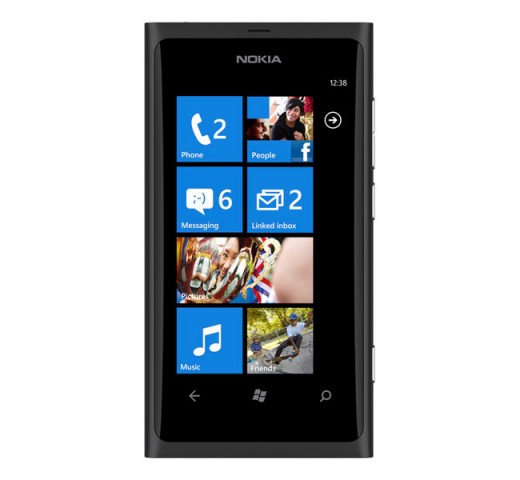
nokia Lumia 800 520x480 Androids strength is also its weakness: Decentralization The biggest threat to Android may be Microsoft, because even though the iPhone continues to grow in popularity, it will likely never monopolize the market. Now that WP is up to par and available on many devices and carriers, Android is no longer the only way to escape Apple’s preachy fans. If WP starts picking up steam, carriers will promote fewer Android phones and average consumers will buy the new product that access Facebook and email the fastest.
If Android does retain its mobile market-share, while growing on tablets (things can only get better at this point), it will at the very least survive a long while. But if Microsoft blows its chance with Windows Phone, something else will step in as Android’s new threat.

Conclusion

Decentralization is both a blessing and a curse. It’s gotten Google far very quickly, but may end up causing a slow down later on. The iPhone and Android are both stronger than ever before, clearly hurting RIM’s share, and only time will tell us what survives. After harping on all of Android’s problems, the solution is still unclear. Now that Android has achieved market dominance, I feel Google needs to start enforcing a more unified user experience. They need to create something consistently brag-able.

PogoPlug Cloud gives Android access to free cloud storage


Niche hardware maker PogoPlug have made a name for themselves delivering reliable and easy access to network attached storage, both on home and local business networks and across the Internet. Their latest creation is in line with a lot of their more web-centric competitors: PogoPlug Cloud. The free service will give anyone 5 gigabytes of free data storage – no PogoPlug hardware purchase needed – and the current Android app will be updated to access the storage natively.

The PogoPlug app has been available for some time, but previously it could only access drives, files and folders physically connected to your home network. Now the app is capable of retrieving up to 5 gigabytes of data, and instantly uploads photos and videos to its sharing service, a la Picasa. Video and music can be streamed from the storage space, and files or folders can be shared with your Google+ contacts. Free users get “only” five gigabytes, but you can expand your data storage for a monthly fee.
The cloud move puts PogoPlug in direct competition with DropBox, which is currently offering only 2GB of data storage to its free members. HTC customers get an expanded 5GB. At the present PogoPlug hasn’t revealed any integration software like Dropbox has, but then, committed users of PogoPlug’s hardware will tell you that its Network-attached storage devices fill that niche perfectly. We’ll be keeping a close eye on the cloud storage space, especially as Google itself pushes its users more and more towards on-demand file access. You can download the updated app now.

Barnes & Noble reveals Microsoft’s Android patents in detail


Last week Barnes & Noble lobbied United States regulators to investigate Microsoft, on the basis that its lawsuits and licensing agreements with Android OEMs constituted monopolistic behavior. The first fruit of this effort is a detailed look at the patents that Microsoft has been using to pressure manufacturers into licensing deals worth hundreds of millions of dollars. Barnes & Noble seems determined to keep from paying Microsoft for its Nook line of e-readers and tablets.


Barnes & Noble contends that the patents are frivolous and trivial, most of them containing considerable prior art that existed long before the patents were awarded. There’s nothing to say that the six patents outlined in the case against Barnes & Noble are the same ones that have been used on the likes of Samsung and HTC, but it’s a fair bet that some or all of them are the crux of Microsoft’s arguments across the Android spectrum. In a letter to the Department of Justice, B&N said that the patents “cover only arbitrary, outmoded and non-essential design features,” but that Microsoft is charging extremely high licensing fees, essentially bumping up the price of “free” Android and giving Microsoft the power to stop individual features from being implemented.
Here’s all the patents Microsoft is using, and Barnes & Noble’s rebuttal:
I. ’372 Patent (Web Browser Background Image Loading)
The ’372 patent was filed April 18, 1996. Very generally, the patent relates to an outmoded system for retrieving an electronic document like a webpage that includes an embedded background image, which may have a bearing on very old web browsers connected to the Internet via slow, dial-up connections, but has little application in the context of improved, modern Internet connections….
II. ’522 Patent (Operating System Provided Tabs)
The ’522 patents was filed December 13, 1994. The patent relates to a single, simple tool provided by an operating system (such as Windows) that allows applications running on that operating system to have a common look and feel. Since operating systems provide many such tools, the patent amounts to nothing more than a trivial design choice. In particular, and despite the fact that this concept is in the prior art, the ’522 patent’s method allows for the creation of tabs. The tabs are analogous to dividers like those found in a notebook or to labels found in a file cabinet, and allow the user of an application to navigate between multiple pages of information in the same window by clicking on the tabs….
III. ’551 Patent (Electronic Selection with “Handles”)
On its face, the ’551 patent purports to claim priority back to a November 10, 2000 filing date. Generally, the ’551 patent relates to another simple and trivial feature that is not only disclosed by numerous prior art references, but is certainly not central to an operating system like Android — selecting or highlighting text or graphics within an electronic document. The patent provides that a user selects a word or phrase, for example, by tapping on a touch screen display or clicking with a mouse. Such a selection may be shown by highlighting the selected word or phrase. The user is presented with “selection handles” on one or both ends of the selected areas. These “selection handles” can be moved by the user to highlight more or less text or graphics….
IV. ’233 Patent (Annotation of Electronic Documents)
The ’233 patent was filed December 7, 1999. Like the other Microsoft patents, the ’233 patent relates only to one small feature that has long been present in the prior art and is not central to Android or any other operating system. More specifically, the patent generally relates to a method for capturing annotations made in an electronic document (like an electronic book), without changing the electronic document itself….
V. ’780 Patent (Web Browser Loading Status Icons)
The ’780 patent was not filed until May 6, 1997, long after the first web browser came to market. In addition to being late to the game, the patent is directed to a very simple and obvious feature — a temporary graphic element or status icon that is displayed to indicate that a hypermedia browser (such as a web browser) is loading content. When a browser is intended for use with a portable computer system with a limited display size, the ’780 patent notes that it is desirable to maximize the browser’s content display area (the portion of the browser that actually displays a website, not the menus, toolbars, or buttons). Thus, the patent makes a trivial design choice and provides that the graphic element or loading status icon is to be temporarily displayed in the content display area of the browser as opposed to a separate space such as the browser’s menu bar, tool bar, or a separate status bar….
Barnes & Noble also outlined several other patents and points. For a full look at all the legalese (which is far beyond the analytical powers of this humble Android blogger) check out Groklaw’s post on the subject.
Barnes & Noble seems completely committed to breaking the cycle of Microsoft’s patent trolling legal action and licensing. I’d wager that Google couldn’t be happier, since none of the various companies going after Android OEMs have directly threatened the parent company with legal action. If Barnes & Noble succeeds in fighting off Microsoft’s suit and securing and investigation, it might (and this is a long shot here) means that the licensing deals already in place elsewhere are renegotiated or dropped.

Google butts heads with the RIAA over MP3 Music Download Pro


MP3 Music Download Pro, currently sitting pretty at #4 in the US Android Market’s Free Apps sales list. This is a bit of a thorn on the side of the Reichstag Recording Industry Association of America, because in the right light, taking all things into account, calling a spade a spade and generally telling it like it is… it’s a piracy app. When asked to remove it from the Market, Google refused, stating that the application could be used to download legal music as well.

The defense is often used for controversial technologies, most notably BitTorrent listings and clients. The app does a modified Google search for an artist, song or album, then downloads MP3 files it finds sitting in mostly abandoned or unpublished directories across the web. The app itself is free, but developer Yu Liu makes money off of the ads served therein. And considering that MP3 Music Download Pro has amassed over ten million downloads so far, there’s a considerable amount of profit being made on what is technically, for the most part at least, illegal activity.
Google’s position on the matter is interesting. Google tends to be in favor of users’ rights, and from a legal standpoint, MP3 Download Pro is only providing tools, not actually instigating theft. But on the other hand, Google has been steadfast in booting classic video game emulators and ROM search apps off of the Android Market – software that would seem to fall under the same legal loophole. Considering Google’s musical aspirations at the Spinal Tap event later this week, not to mention rumors of a seriously deficient music store launch, they may want to reconsider their position.

Apple beats Australian retailers into submission over Galaxy Tab sales


A while back we told you about independent Australian retailers refusing to honor the ruling from Apple’s civil case against Samsung. A small number of independent shops and websites skirted the sales ban on the Galaxy Tab 10.1 by importing them directly from China without buying them from Samsung first. Well it looks like Apple’s legal reach (not to mention gall) knows no bounds: the company has halted sales at all but one of the “rogue” retailers, in some cases using threatening letters to convince them of their position.

The Australian news site was only able to find one website that’s still selling the Samsung Galaxy Tab 10.1 down under, Dmavo.com.au. The sales injunction bans Samsung from selling its tablets to retailers and directly to consumers, but retailers are free to find alternates sources of inventory, in this case, electronics shops in China and Taiwan. The rest of the independent stores that were selling the tablets have all decided to stop, likely to keep from risking a civil suit from Apple’s Australian arm.
Samsung is currently appealing the sales ban, but since the preliminary and primary injunctions made it through, that seems unlikely. Apple previously refused a settlement of undisclosed terms in the case, and after the details of the late Steve Jobs’ vitriolic rants against Android, it’s unlikely that they ever will. Samsung has retaliated by seeking a ban on iPhone 4S sales, and that particular case goes before a judge today.

Google Music set to launch without Sony or Warner songs


The long-awaited Google Music service should arrive later this week at Google’s Spinal Tap-inspired event, but if Cnet is to be believed, it’ll launch without two of the biggest players in the US music industry. Sony and Warner will not be posting any of their artists on the new MP3 store, putting it at a major disadvantage to iTunes and other digital music vendors. The other two major labels, EMI and Universal, will be selling music through Google.


According to anonymous insiders, the music labels want Google’s store to be an open experience available to anyone, whereas Google wants to make it an Android-only experience, likely rolling it into their existing Google Music app and selling songs through the Android Market. There are obviously some conflicting agendas here – music companies want as many customers on as many devices as possible, while Google is looking for a competitive advantage, or at least an alternative. Apparently the difference was too much for Warner and Sony.
Music contracts, particularly when it comes to digital sales, are known to be a long and drawn-out affair. Even Apple didn’t have all the major labels available when it launched iTunes, though they joined up eventually. If Google Music or whatever the name ends up being takes off, expect large and small distributors to jump on board. But without a comprehensive library, it’s hard to see why music shoppers wouldn’t simply go somewhere else and buy MP3s from all the major labels, then load them up on an SD card. Google will have to show some impressive features, like a well-thought-out cloud strategy, to put their best foot forward.
[via SlashGear]

Quickoffice Pro is FREE, Usually $14.99 [Amazon Free App]

Amazon has been quite successful with their “Free App of the Day” concept. In fact, it works so well that Google seems prepared to adopt the idea (Free Song of the Day) for the rumored Google Music Store. Today’s Amazon Free App of the Day will save you $15 bucks and give you access to a mobile office of sorts.

Enjoy: Quickoffice Pro for FREE!

Google X: What Are They Working On In Google’s Top Secret Lab?

Everyone in the tech world develops products several years out. When the products they’ve been working on so hard are about to launch, they stay incredibly secretive in hopes to bolster excitement for their unveiling. It’s a the process with which we’re all familiar. But what if you extend “several years out” to forward thinking ideas that could change the world and increase “incredibly secretive” by a magnitude of 1,000?

Then you’d have Google X.

Google X is a secret Google lab working on ultra secret projects. Nobody knows where it is. Nobody knows what’s inside. Nobody knows what they’re working on. Except the people involved, of course, otherwise that would just be weird.

The point is that Google has already revolutionized the way we live, work, and play, and they’re hard at work trying to hit their next big home run. Perhaps the difference now is that they’ve got a lot more resources with which to work. Many of the ideas are thought to be in the “conceptual” stage and they’re supposedly tackling a list of 100 “shoot for the stars” ideas. I’m betting one of them we DO know: Driveless Cars.

So YOU tell US: what projects do you think Google is working on in Google X?

[Via NYTimes]